
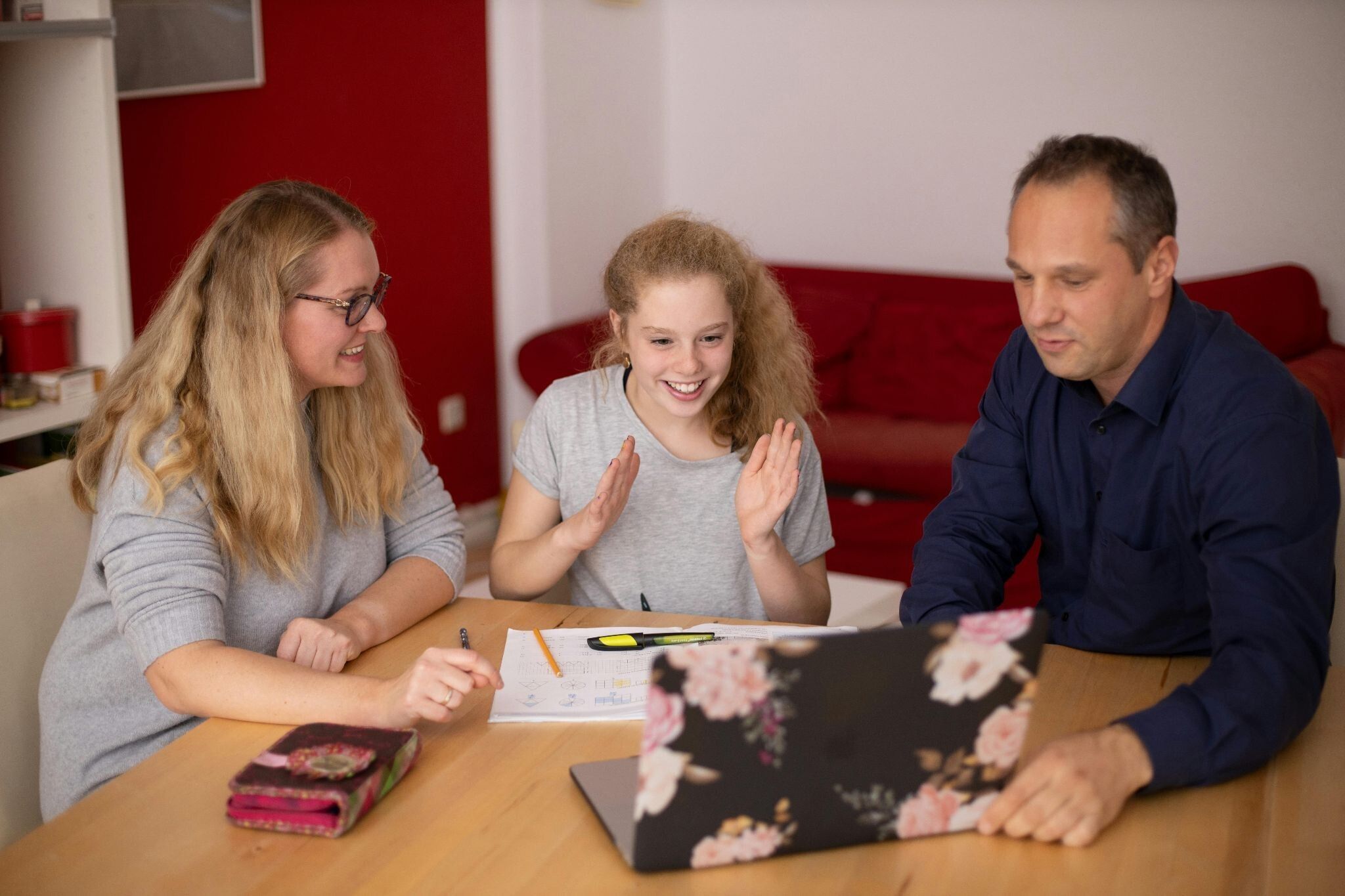
Children enter the world curious by default — they touch, taste, question, and explore everything. But over time, external pressures like grades, screens, or rigid routines can dim that spark. Parents play a profound role in keeping curiosity alive — shaping how kids perceive learning, creativity, and problem-solving.
A Quick Takeaway
Kids learn best when they feel safe to explore, make mistakes, and ask “why.” Your goal isn’t to fill their heads with facts — it’s to create conditions where questions grow naturally. When curiosity is protected and modeled, children evolve into independent, motivated learners who seek answers for themselves.
The Science of Curiosity
Curiosity activates the brain’s reward system. Neuroscientists have found that when children ask questions and then find answers, dopamine — the “motivation” chemical — reinforces the learning loop. This means when a child’s interests are dismissed (“we don’t have time for that right now”), the brain’s reward cycle gets interrupted. Encouragement, on the other hand, strengthens their sense of autonomy and competence — both key to intrinsic motivation.
How Parents Can Nurture Their Children’s Natural Curiosity to Raise Lifelong Learners
Children enter the world curious by default — they touch, taste, question, and explore everything. But over time, external pressures like grades, screens, or rigid routines can dim that spark. Parents play a profound role in keeping curiosity alive — shaping how kids perceive learning, creativity, and problem-solving.
Lifelong Learning in Action
Children emulate what they see. If parents approach the world with curiosity — reading, questioning, experimenting — that energy becomes contagious. Returning to learning as an adult is a powerful way to demonstrate this. When parents pursue education, they show that growth never stops.
For instance, many adults now study psychology online to understand human behavior and motivation more deeply. Online degree programs make it possible to balance learning with work and family life. Studying psychology can also illuminate how thought, emotion, and environment shape people — equipping parents to support both their children and others in need.
Turning Everyday Life Into a Learning Playground
Children’s curiosity thrives in the ordinary — not just museums or classrooms. The kitchen, backyard, or even a grocery trip can become a living lab.
● Cooking dinner: a chemistry experiment in disguise.
● Watering plants: exploring ecosystems and responsibility.
● Sorting laundry: pattern recognition and categorization.
Curiosity isn’t about special resources; it’s about attention. When you narrate what you’re doing (“I wonder why this dough rises more than yesterday’s”), you normalize wonder as part of daily life.
Cultivating Self-Motivated Learning
- Start with Their Questions – When your child asks something, resist the urge to answer immediately. Ask, “How could we find out?”
- Create “Curiosity Zones” – Designate spaces at home where kids can build, read, tinker, or paint freely.
- Keep Curiosity Journals – Encourage your child to jot down things they wonder about — like a log of questions rather than answers.
- Praise Process, Not Product – Swap “You’re so smart” for “I love how you kept trying different ways.
- Involve Them in Decisions – Let kids choose weekend activities or books. Autonomy builds investment.
Freedom without structure can overwhelm kids. The trick is guided curiosity — giving enough scaffolding for them to explore meaningfully. Let routines provide rhythm, not rigidity. A predictable framework (like reading time after dinner or weekend science projects) gives kids stability while still leaving room for exploration.
FAQ: Common Parent Questions About Curiosity
Q: What if my child seems disinterested in learning?
A: Disinterest often hides fatigue or fear of failure. Reframe “learning” into something active — build, draw, question, or explore instead of lecture.
Q: How can I manage screen time without killing curiosity?
A: Use screens as springboards, not substitutes. Watch documentaries, then recreate what you saw offline — experiment, draw, or research together.
Q: Should I correct misconceptions right away?
A: Not immediately. Let your child explore their hypothesis first. Discovery through gentle correction sustains their drive.
A Resource Worth Knowing
Curiosity thrives when kids have tools that turn questions into hands-on discovery. One remarkable option for parents looking to inspire creative exploration is KiwiCo — a company that delivers science, art, and engineering projects straight to your doorstep.
Each KiwiCo crate comes packed with age-tailored activities that transform complex ideas into playful experiments. Whether it’s building a mini catapult, designing a solar system mobile, or experimenting with chemical reactions, KiwiCo helps children connect curiosity with creation.
Beyond convenience, what makes this resource stand out is its educational philosophy: learning through doing. Every project is designed by educators and child development experts to foster curiosity, confidence, and critical thinking — without relying on screens.
Quick Tips for Daily Curiosity Boosts
● Turn “Why?” questions into small experiments.
● Keep books and art supplies within reach.
● Ask your child to “teach you” something new.
● Take walks without destinations — let questions lead.
● Share your own moments of wonder (“I don’t know, let’s find out!”).
Closing Thoughts
Curiosity isn’t a trait — it’s a habit shaped by the environment. When parents create a culture of questions, exploration, and open dialogue, they don’t just raise high achievers — they raise thinkers. Children nurtured in curiosity grow into adults who learn for the joy of it — and that’s the most enduring gift any parent can give.
